Last month, the Lowry Theatre hosted BEYOND25, turning MediaCity into a platform for emerging talent from the creative industries. CreaTech innovators shared the stage with leading voices from YouTube, Channel 4, BFI, Google DeepMind, the V&A, the British Council, and the UK’s top universities, alongside delegates from more than 20 countries. Running in partnership with BEYOND25, i‑PLACE25 extended the conversation into place‑based innovation, connecting research with regional development and showcasing how creativity can drive growth in towns, cities, and communities across the UK. The Greater Manchester Business Growth Hub played a leading role—as local partner at BEYOND25 and programme partner at i‑PLACE25—helping to shape discussions that will influence the future of the UK’s creative economy.
Together, the two conferences asked a central question: what does innovation mean for the cultural and creative sectors today?
Innovation, as explored at BEYOND25 and i‑PLACE25, meant forging new relationships between people and technology, communities and institutions, and between creativity and commerce. Time and again, speakers returned to three Rs: rethinking skills, rebalancing power, and reconnecting creativity to place and people. This highlighted the differences between the roles of inventors and innovators. While inventors create something entirely new, innovators often build on what already exists by seeing old problems in a new light and repurposing tools across sectors.

True innovation requires determination, courage and support. The Innovation Team at the Business Growth Hub provides support in many ways combined with industry knowledge, to nurture businesses who are on an innovation journey.
Judith Ross, Senior Innovation Specialist
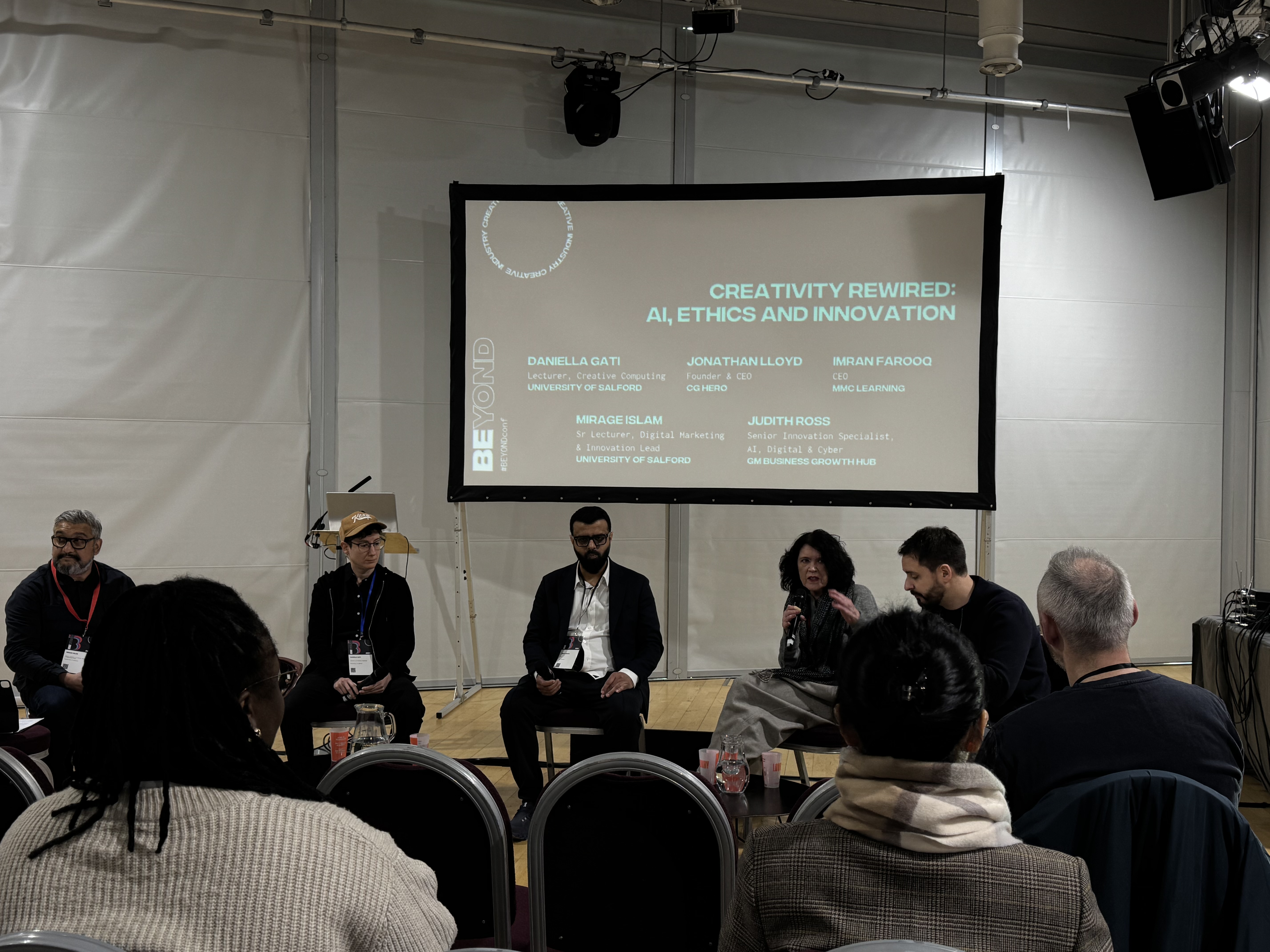
Whether in TV, music, the arts, gaming, fashion, or education, innovation is most powerful when it is human-centred, inclusive, and rooted in place. More than one keynote stressed that creativity and culture are how people connect with communities and form attachments to places. They argued that creators should be understood as infrastructure, not just as talent, because creativity is the foundation on which communities, businesses, and industries thrive. Genuine innovation comes when their voices are embedded in decision making and when trust is built between institutions and communities.
Place based innovation therefore requires us to look at the economic and social outcomes of emotional attachment. Greater Manchester is well positioned to lead this charge with its unique mix of global media hubs and rich popular culture scene. Anchors such as the Lowry and MediaCity show how culture can drive regeneration, but the future lies in ensuring that innovation is inclusive, sustainable, and rooted in the lived experiences of people across the city region.
A poignant example of local innovation in action was presented by Coral Grainger and Dr Anisa Kabir Abdulfatah at iPLACE25. As representatives of Greater Manchester Colleges and Salford Business School, they argued that we need to rethink innovation models because innovation is distributed unevenly across the city region and concentrated in universities, government, and large corporations. To rectify this, the partners launched a £2.5 million, 12-month pilot of a new radial innovation network. In this model, apprentice Innovation Ambassadors drawn from Greater Manchester Colleges work directly with time poor SMEs to help them understand innovation and apply creative solutions to industry challenges. The initiative has had significant impact on business engagement and demonstrates why further education must be integrated into innovation models. It also shows why innovation needs to be communicated in ways that resonate across communities and industries.
Sustainable innovation isn’t a one-off, it’s a long game. It thrives on collaboration, peer support, and a network of partners and funding opportunities that keep momentum alive.
Dharma Nurse, Senior Innovation Development Manager
With the connection between creativity and innovation established, the conferences focused on what comes next: crossing boundaries, dismantling silos, and cross-sector collaboration. Speakers called for investment strategies that are distributed and enduring, anchoring creative IP in the communities where it is created. They agreed that ten awards of £25,000 add greater value to the creative economy than a single award of £250,000.
The GM Business Growth Hub offers precisely these alternative sources of funding. Our dedicated Innovation Service helps individuals identify and access finance to unlock game‑changing growth opportunities, with over a third of its funding directed to digital and creative businesses. We support creative organisations to commercialise, attract investment, and grow sustainably through the Create Growth Programme, which is fully funded by the Department for Digital Culture, Media and Sport (DCMS). Applications are now open for the next round, starting in February 2026, which will focus on film, TV, content creation, podcasting, theatre, and video production.
We also help creatives access alternative finance through GC Business Finance and GC Angels. Since its inception, GC Business Finance has provided more than 5,500 loans worth £61.9 million in the city‑region, while GC Angels has invested £3.9 million directly into 42 businesses. These initiatives are designed to reach founders who often lack access to traditional finance, with nearly 40% of Start Up Loans supporting female‑founded businesses and over 20% backing ethnic minority entrepreneurs.
GM Business Growth Hub is committed to ensuring diverse voices are present in the spaces where innovation is debated and shaped. For that reason, the Innovation Service sponsored ten New Audience tickets at BEYOND25, which were designed to open doors for creatives under 35, individuals from diverse ethnic backgrounds and nationalities, people with disabilities, emerging freelance talent, and those from economically disadvantaged communities.
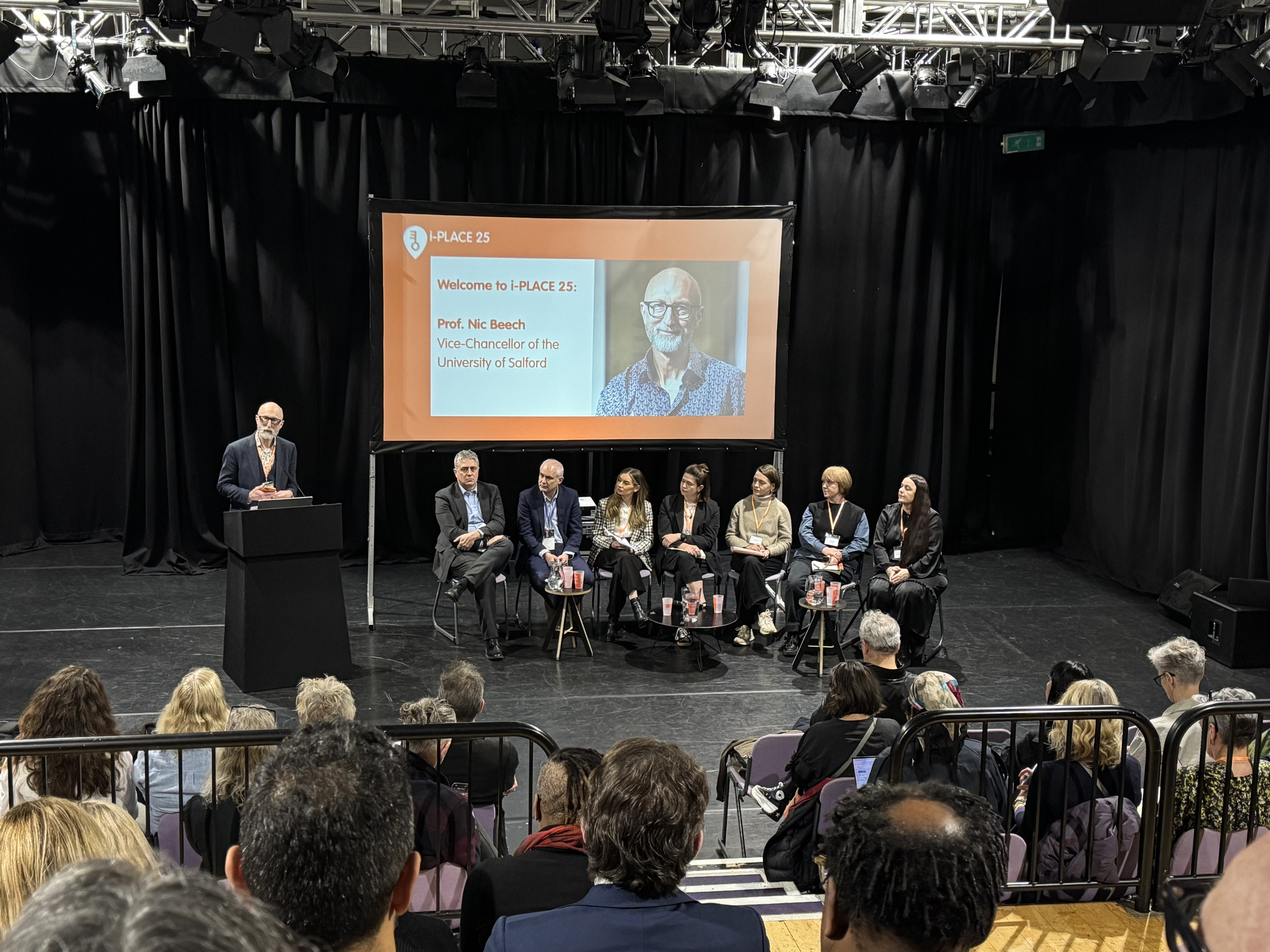
BEYOND25 and iPLACE25 stressed the importance of skills and adaptability, with micro courses, continuous professional development, and agile learning models highlighted as crucial. Beyond technical expertise, meta-skills such as resilience, imagination, and the ability to pivot will sustain creative careers in the long term. Equally important was the recognition that innovation requires experimentation and a tolerance for failure. Artificial intelligence featured heavily but was rarely described as a threat to creativity. It was framed as a tool to augment human imagination, from AI powered relighting in film production to gamified healthcare education. The emphasis was on how AI can help content localisation and free up time for human creativity while maintaining ethical responsibility and trust.
To that end, speakers offered practical guidance for businesses and entrepreneurs navigating the creative sector today:
- Embrace experimentation. Failure is not the opposite of innovation but part of its process. Small experiments can build confidence, momentum and resilience.
- Recognise your audience and the rise of shortform video. In the creator economy, audiences increasingly shape the direction of content, with more than a third of UK consumers now creating content themselves. Video has become the default mode of communication, and shortform formats dominate the attention economy. The challenge is to use these formats strategically to build deeper, more sustained connections with audiences.
- Use AI to deepen engagement. AI tools can strengthen fandom, incentivise repeat interaction, and therefore extend the value of entertainment IP across creative sectors, but we must use it critically and ethically.
- Understand the creator economy’s evolution. The UK is at the forefront of creators moving beyond individual personalities into franchises and studio businesses. Traditional entertainment must treat creators as infrastructure, not simply talent, if collaboration is to succeed.
- Protect and nurture talent. With nearly a third of the creative workforce freelance, supporting portfolio careers that blend flexibility with stability is essential to retaining creativity.
- Break down silos. Partnerships across education, culture, health, and community unlock innovation. Ecosystems thrive when boundaries are crossed and diverse perspectives are brought together.
- Recognise funding realities. While agglomeration of resources in large institutions is a reality, distributed, place-based models often deliver more sustainable impact. Smaller pots of funding can build trust and support grassroots innovation.
- Value place. Anchor intellectual property in Greater Manchester and celebrate regional talent. Innovation must be rooted in local culture, identity, and community needs.
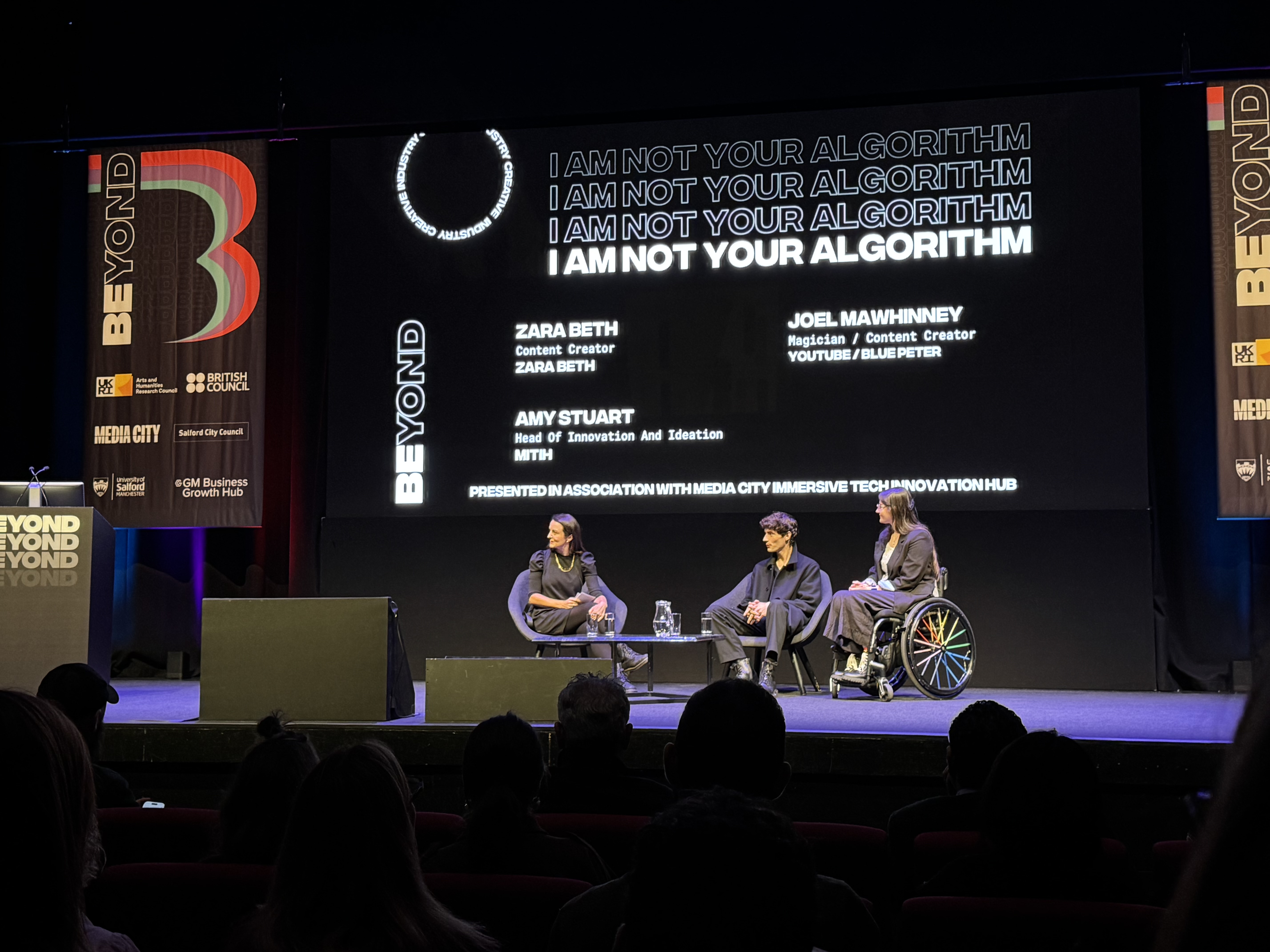
For those interested in joining the creative sector, the guidance was equally clear:
- Start creating. Engage with free tools, platforms, and communities online. Connect with peers and find your creative tribes.
- Seek agile learning. Apply for microcourses and short diplomas (like the NFTS Creator Incubator, supported by YouTube) that keep pace with rapid technological change.
- Learn holistically. Focus on end-to-end briefs rather than isolated skills and get used to studio environments and group work as most creative projects are collaborative.
- Become a generalist. The industry is moving away from narrowly defined specialist roles. To stay resilient as tools evolve and expire, build a broad skillset that allows you to adapt.
- Develop meta-skills. Critical thinking, problem solving, communication, resilience, imagination, and adaptability are timeless capabilities that will sustain creative careers in the long term.
For Greater Manchester, the opportunity is clear. By embracing experimentation, protecting talent, and building ecosystems that value creativity as infrastructure, the region can continue to lead the way in shaping the future of the UK’s creative economy.
Get in touch
Please contact us at 0161 3593050 or query below.
Take that first step and we’ll support you with whatever you need to succeed.
Sign-up to our newsletter
Insights, news, events and opportunities straight to your inbox.