By Isabelle Farquhar, International Scale Up Programme Manager, GM Business Growth Hub Estimated Reading Time: 4 mins Date: 9th November 2026
If you already sell overseas, a programme called "Scale Up" is easy to dismiss as something for beginners. The businesses that joined Cohort 3 of the International Scale Up (ISU) programme thought much the same – and most of them were already exporting, several to multiple markets.
What they found wasn't an introduction to exporting. It was a way to turn the thing they'd been doing on instinct into a deliberate strategy. In my time running the programme, the most common reflection I hear isn't "I learned how to export" – it's "I now have a structured way to decide where and how." For experienced exporters, that shift from ambition to method is where the value sits.
Exporting is one thing. Exporting with a strategy is another.
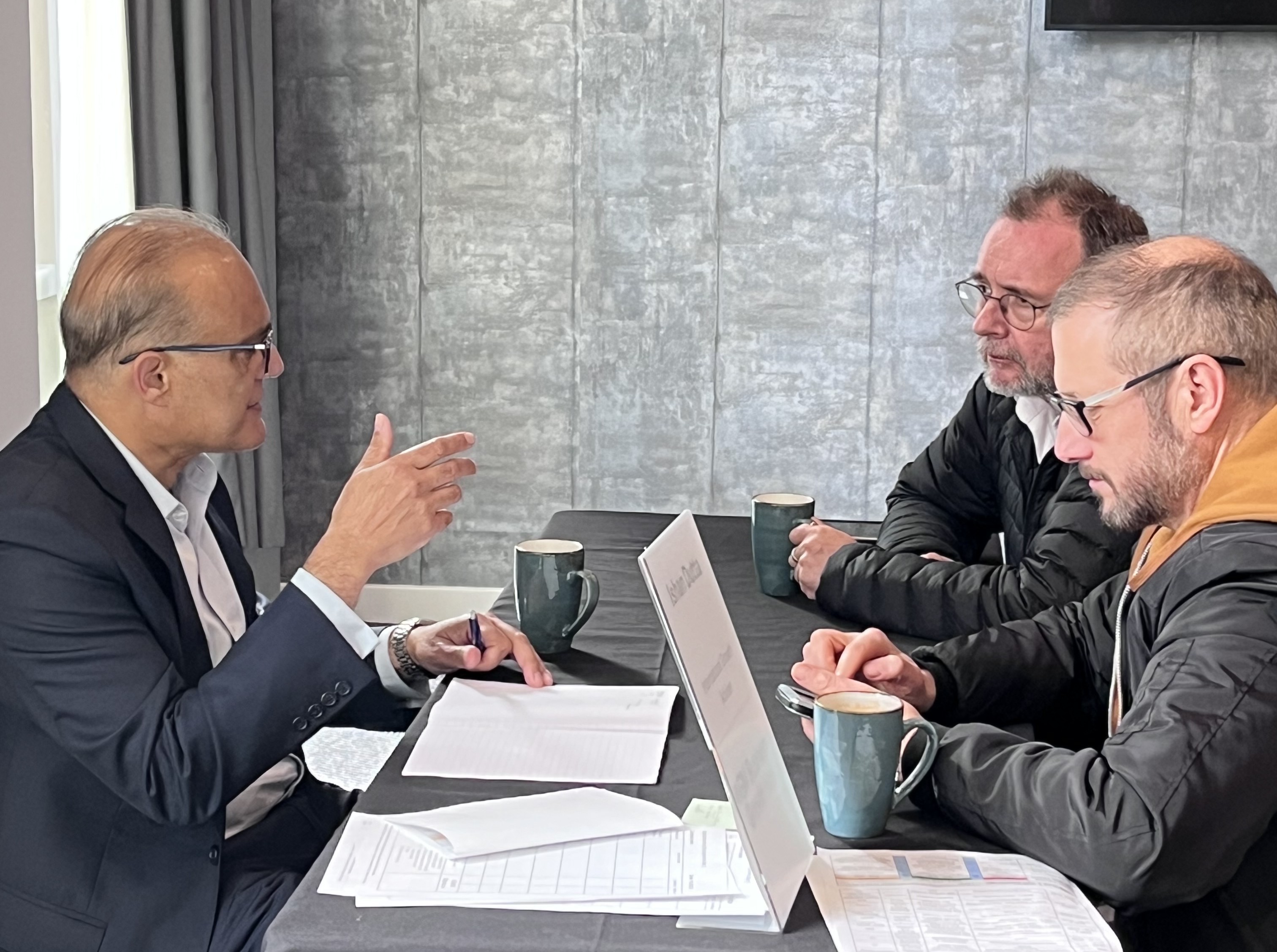
Many businesses start exporting reactively – an order comes in from abroad, a contact opens a door, a market looks promising. It works, up to a point. But growth built on individual opportunities is hard to scale, and harder still to repeat on purpose.
That was the gap Cohort 3 kept naming. One business already expanding into Europe put it plainly: the programme "brought to light many considerations that I'd not thought of before, including how much effort we put into overseas market expansion versus more expansion here. It helped me to bring more focus into our growth."
That's not a beginner's takeaway. It's an experienced exporter realising that effort without a framework can pull a business in several directions at once. The value wasn't learning to export – it was learning to prioritise.
Choosing markets on evidence, not opportunity
For exporters already in one or two markets, the hardest question is usually the next one: where to go next, and how to be sure it's the right call before committing time and money.
This was the single most valued part of the programme. Cohort 3 came away with a method for scoring and comparing markets rather than following the first promising lead. One scaling exporter described their biggest takeaway as "the format to select a new market, with the scoring mechanism and strategy" – and planned to start "selecting the market based on ease of trade, language, political impact" and similar factors.
Another, already exporting and weighing a move into East Asia, left with practical tools to size the opportunity: "being able to search US codes globally to independently assess the size of the market in each market." They committed to a specific next step – attending a trade show before the end of the year – backed by evidence rather than instinct.
For a business that already exports, this is the difference between opportunistic expansion and a repeatable process for entering markets.
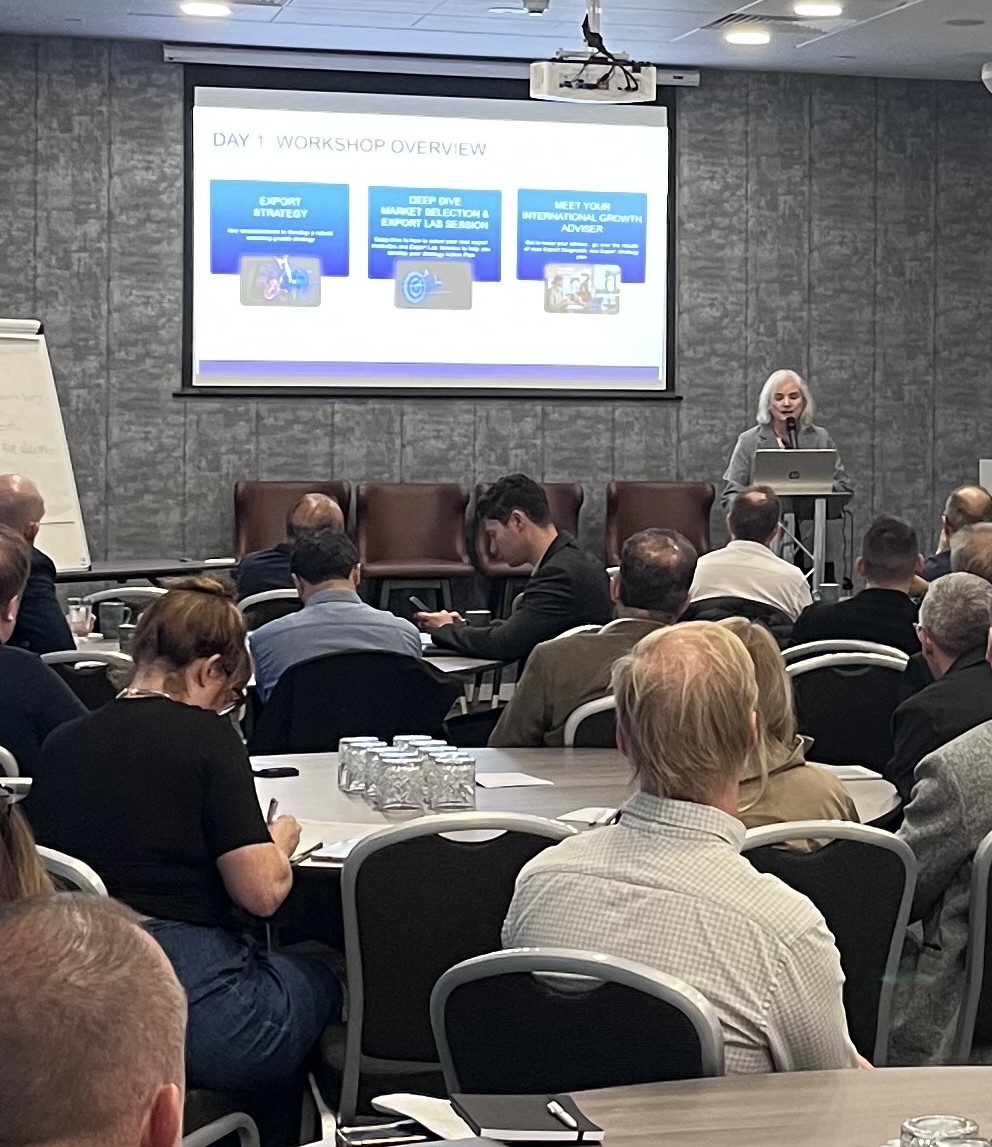
The things you don't know you don't know
The most telling feedback came from businesses with real export experience who still found blind spots. One multi-market exporter listed what they'd taken away:
Ged Tyrrell, CEO at Tyrrell Biulding Technologies Group Ltd, Cohort 3 participant
None of those are beginner topics. They're the operational and financial details that determine whether an established export operation is protected and profitable, or exposed. The same business left intending to "create a more robust plan before jumping in" on a German expansion they were already considering – slowing down a live decision to get it right.
That's the quiet value of the programme for experienced exporters: not the things you know you need help with, but the ones you'd never have thought to ask about.
A plan you act on – with an advisor beside you

A strategy is only useful if it survives contact with the business. What set the programme apart for Cohort 3 was that the thinking didn't stop when the workshops did. Participants work one-to-one with an International Growth Advisor from GM Business Growth Hub over 12 months, turning the plan into action.
You can see it in what businesses did next. One planned to "develop our export strategy in consultation with our adviser," and had already lined up a Manchester Metropolitan University student to support the market research. Another valued the "positive, ongoing support" and the introductions that came with it. These are businesses treating the plan as the start of the work, not the end of a course.
The results back it up. Across the cohort, 85% left feeling confident or very confident about growing internationally, 96% of session ratings were Good or Excellent, and the programme scored an average of 9 out of 10 on likelihood to recommend.
Hear how Seb Heeley, Co-Founder of Spirit of Manchester Distillery on Cohort 3, put this into practice on the programme:

confident/very confident growing internationally

of session ratings were Good or Excellent

on likelihood to recommend the programme
Cohort 4 is now open
If you're already exporting – occasionally, or across several markets – ISU isn't about teaching you to do what you already do. It's about giving your international growth the structure, evidence and expert challenge to scale it deliberately.
Applications for Cohort 4 of the International Scale Up programme are now open. It's fully funded, delivered through a partnership between GM Business Growth Hub, the Greater Manchester Combined Authority, GM Chamber of Commerce and the Department for Business, Innovation, Science and Trade, and includes a dedicated 1:1 International Growth Advisor for 12 months and support to access £2,500 in grant funding.
Add structure to the exporting you already do. Apply for cohort 4.
About Isabelle Farquhar

Isabelle Farquhar is International Scale-Up Programme Manager at GM Business Growth Hub, where she supports ambitious Greater Manchester businesses to develop their international growth and export strategies. With more than 25 years’ experience supporting businesses across the UK, France and Spain, Isabelle brings a practical, hands-on approach shaped by her background in export, sales, marketing, business strategy and running her own business. She is passionate about helping businesses identify new opportunities, overcome barriers to growth and build the confidence and capability to succeed in the UK and international markets.